Atlas Copco's New Smart Controller Could Help Jobsites Cut Fuel Costs and Downtime
Key Highlights
- The ECO Controller automatically manages power from generators, battery storage, the grid and renewable energy sources to improve efficiency.
- The system is compatible with several major generator controller brands, making it easier to integrate with equipment contractors already own.
- Fleet managers can monitor equipment health, energy use and system performance remotely through Atlas Copco's Fleetlink telematics platform.
Keeping a jobsite powered has become more complicated than simply firing up a generator. With contractors increasingly relying on battery storage, renewable energy and hybrid power systems, managing electricity efficiently can make a big difference in both operating costs and productivity.
That's the problem Atlas Copco hopes to solve with its new ECO Controller, an energy management system designed to help operators get more out of temporary power equipment while reducing fuel consumption and downtime.
The ECO Controller is now built into Atlas Copco's battery energy storage systems, including its ZBP and ZBC models. Acting as the system's central control hub, it manages how power is generated, stored and distributed across a worksite.
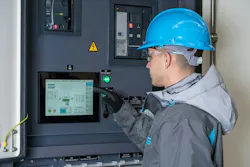
Instead of monitoring several pieces of equipment separately, operators can view the entire system through a touchscreen interface that displays battery levels, power demand and equipment status in real time. The goal is to make it easier to balance energy use and keep operations running smoothly.
"As customers seek energy solutions to operate more sustainably, the energy transition is gathering pace, affecting many sectors and industries," said Bárbara Gregorio, divisional sales and marketing manager for Atlas Copco's Portable Power and Flow division. "We are excited by this transformation of the power supply sector and have expanded our energy offering with these new solutions to enable customers to increase their operational agility and to make significant cost savings."
One of the biggest updates is expanded compatibility with equipment already on many jobsites. The new controller can communicate with generators from several manufacturers, including DSE, CAT, Cummins and ComAp, allowing contractors to integrate existing equipment instead of replacing entire fleets.
That flexibility makes it easier to build customized portable power systems that combine generators, battery storage, the electric grid and renewable energy sources based on a project's specific needs.
Atlas Copco also redesigned the controller's interface after gathering customer feedback over the past year. The updated display offers cleaner graphics, simplified navigation and more useful information at a glance. New users can work with a streamlined layout, while experienced operators still have access to more advanced controls.
Behind the scenes, the controller adds several automated features, including automatic calibration, charging adjustments and customizable operating settings for different jobsite conditions. It also includes expanded diagnostic tools that provide detailed information about battery health, temperatures, system performance and troubleshooting.
The controller can also help crews respond faster when problems occur. By continuously monitoring equipment health and power demand, operators can identify potential issues early and quickly react to unexpected power interruptions before they disrupt work.
Remote monitoring is another key feature. The system sends operating data to Atlas Copco's Fleetlink telematics platform, allowing fleet managers to check equipment status, monitor performance and make adjustments without being on-site.
The system is designed to help rental companies and contractors reduce fuel use, lower maintenance costs and extend equipment life while making it easier to add new energy sources as future power needs evolve.
As more construction projects move toward hybrid and low-emission power solutions, tools that simplify energy management are becoming just as important as the equipment producing the power.
Source: Atlas Copco