Emergency Power in Extreme Weather Marks the Salmon Industry in Norway
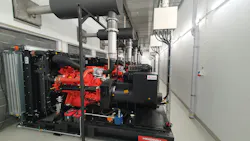
The next time you eat some salmon, think about the process it might have gone through to get to your table. The people at Himoinsa know something about it.
Himoinsa supplies backup power for onshore salmon smoltification facilities located in Laksefjord, Finnmark, one of Norway’s northernmost regions. The project, developed in collaboration with its dealer Akselsen Engineering AS, addresses the needs of industrial applications where uninterrupted power supply is critical to maintaining the stability of the production process.
Himoinsa has extensive experience in supplying power to the salmon industry, both in Europe and Latin America, with gas and diesel power solutions. On this occasion, it has installed over 3 MW of power using generator sets configured to operate in a facility with redundancy requirements, space constraints and extreme weather conditions.
Operation in a remote location in northern Norway, subject to low temperatures and strong winds during the winter months, demands an electrical infrastructure capable of guaranteeing availability, proper performance and suitable integration into the plant room.
Critical application for land-based aquaculture
Laksefjord, Finnmark, is characterized by its Arctic environment, low population density and strong links to coastal and fishing activities. This geographical context influences both the project planning and the technical configuration of the facility, particularly because of the distance from major logistics hubs and the harsh environmental conditions.
The facility is dedicated to the smoltification of salmon on land, a key phase in the aquaculture production cycle. During this process, the young salmon undergo the physiological transition that allows them to move from fresh water to salt water, which requires maintaining stable and controlled parameters. In this type of facility, uninterrupted power supply is essential for systems related to water quality, oxygenation, temperature control, pumping and the general operation of the plant.
Redundancy and integration
The technical specifications of the project called for a solution capable of ensuring redundancy and backup capacity, while maintaining efficient integration within a limited space. The 2 x 2,000 kVA configuration was tailored to the facility’s operational continuity requirements and the physical constraints of the plant room.
In land-based aquaculture applications, where the continuous operation of auxiliary systems is essential for the stability of the production process, the backup architecture must be designed with availability, reliability and ease of operation in mind.
The scope of the project includes a turnkey solution with AS14 control panels, tailored to the specific requirements of the facility. This control architecture helps to simplify system operation and facilitate its integration into the client’s electrical infrastructure.
At an operational level, the solution is designed to meet the needs of an industrial plant where prolonged interruptions are not an option. The availability of a backup power supply ensures that the facility’s critical systems remain active, safeguarding the continuity of the smelting process and reducing the risk associated with failures in the main supply.
Arctic conditions
One of the main challenges is the remote location of the facility. The distance, the climate and the operational window constrained by winter mean that logistical and technical planning is a key factor in the success of the installation.
From October to May, the area experiences extremely low temperatures and strong winds, conditions that can affect both the performance of the equipment and the thermal stability of the room where the generator sets are installed. To address this environment, the installation incorporates a hot air recirculation system that modulates the air intake louvers and bypass louvers, maintaining the room temperature within nominal operating conditions.
With this project, Himoinsa reinforces its ability to develop energy solutions in industrial environments where operational continuity is an essential requirement. The combination of industrial generator sets, an optimized configuration for the technical room, adapted control systems and preparation for extreme weather conditions enables the company to meet the demands of a land-based aquaculture facility located in one of the most remote regions of northern Europe.
Source: Himoinsa
About the Author
Michael Roth
Editor
Michael Roth has covered the equipment rental industry full time for RER since 1989 and has served as the magazine’s editor in chief since 1994. He has nearly 30 years experience as a professional journalist. Roth has visited hundreds of rental centers and industry manufacturers, written hundreds of feature stories for RER and thousands of news stories for the magazine and its electronic newsletter RER Reports. Roth has interviewed leading executives for most of the industry’s largest rental companies and manufacturers as well as hundreds of smaller independent companies. He has visited with and reported on rental companies and manufacturers in Europe, Central America and Asia as well as Mexico, Canada and the United States. Roth was co-founder of RER Reports, the industry’s first weekly newsletter, which began as a fax newsletter in 1996, and later became an online newsletter. Roth has spoken at conventions sponsored by the American Rental Association, Associated Equipment Distributors, California Rental Association and other industry events and has spoken before industry groups in several countries. He lives and works in Los Angeles when he’s not traveling to cover industry events.