Hitachi Global Air Power Woodland Restoration Partnership
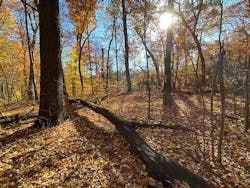
Hitachi Global Air Power U.S., LLC, an industry leader in innovative compressed air solutions, this week announced the launch of a five-year initiative to restore a critical woodland ecosystem at the International Friendship Botanic Gardens (FBG) in Pottawattamie Park, Ind. The initiative brings together conservation, corporate, and community partners to support long-term environmental stewardship, enhance the Gardens’ natural landscape, and create a new public experience.
The $52,000 Five-Year Woodland Understory Restoration Project represents a partnership between the LaPorte County Soil and Water Conservation District (LCSWCD), International Friendship Botanic Gardens, and Hitachi Global Air Power Products. Funding is provided through a $30,000 Clean Water Indiana Grant, with a critical $10,000 match from Hitachi, alongside Hitachi’s long-term maintenance commitment of $12,000 over four years.
“Within a constantly changing global competitive landscape, sustainability is a business advantage,” said Hideki Fujimoto, president and CEO of Hitachi Global Air Power. “The Friendship Botanic Gardens project is part of Hitachi’s comprehensive strategy to achieve net zero carbon emissions, circular transformation, and nature resilience across the value chain by 2050.”
This initiative complements Hitachi’s ongoing environmental efforts in Michigan City, including a native plant restoration project announced in April 2025 that will convert a significant portion of the headquarters campus from traditional turf grass into a native prairie habitat, eliminating the need for irrigation in restored areas.
“This project exemplifies the partnership model working across LaPorte County,” said LaPorte County Commissioner Connie Gramarossa. “We’re bringing over $370,000 in conservation grants to green infrastructure projects throughout the county—with minimal general fund investment. These projects position LaPorte County as both business-friendly and serious about environmental quality—a reputation that matters when companies decide where to invest and families decide where to live.”
Restoring Native Woodland
The FBG project focuses on restoring an 8.5-acre parcel of oak-dominated woodland, part of the Lake Michigan coastal ecosystem, eliminating invasive species—including Garlic Mustard and Amur Honeysuckle—and strategically managing overgrown native shrubs to allow native wildflowers and oak seedlings to regenerate naturally.
“Quality ecological restoration requires the convergence of scientific expertise, committed community partners, and corporate investment in environmental stewardship,” said Paul Vicari, MS4 Stormwater Director and County Conservationist of the LCSWCD. “This collaborative project addresses the ‘missing cohort crisis’—the absence of young oak regeneration—while significantly enhancing biodiversity and pollinator habitat.”
Bridging Cultures Through Forest Bathing (Shinrin-Yoku)
Beyond ecological restoration, the project will develop the area into a regionally recognized Forest Bathing (Shinrin-Yoku) destination. Shinrin-Yoku is the Japanese practice of immersive, contemplative connection with forest environments, scientifically linked to reduced stress and enhanced well-being.
The Gardens have served as a cultural bridge for nearly a century, and this partnership authentically integrates Japanese concepts like Kyōsei (symbiotic harmony) and Ma (meaningful space) into a restored Midwestern landscape. The project will create a unique, healing experience for visitors while supporting FBG’s pursuit of Old-Growth Forest Network certification.
“The Friendship Botanic Gardens has always been a place where nature and culture meet,” said Jenilee Haynes Peterson, executive director of FBG. “This restoration project honors that mission by combining authentic Japanese forest bathing practices with the restoration of our native Midwestern woodland. We’re creating a space where visitors can experience the healing power of nature while witnessing ecological restoration in action.”
Implementation and Timeline
The intensive Year 1 implementation began in November 2025, with public trails and interpretive signage expected to be completed by summer 2026. The restoration will increase light availability by an estimated 30-40%, activate suppressed seed banks of native spring wildflowers, and create enhanced pollinator corridors throughout the site.
“The Friendship Botanic Gardens restoration project embodies Hitachi’s long-term sustainability vision: Grow sustainably while contributing to a harmonized society where environment, wellbeing, and economic growth are in balance,” said Katrina Saucier, Sustainability Director at Hitachi Global Air Power. “The partnership also strengthens our relationship with Michigan City, where Sullair air compressors have been manufactured for more than 60 years, by creating a vibrant community space and encouraging cultural exchange through the incorporation of Japanese practices.”